How to Watch the 2026 World Cup in Brazil: Every Free and Paid Broadcaster Explained
Globo, SporTV, Globoplay, CazéTV and SBT have carved up the 104 matches. Here is exactly where each game lives, what is free, and how kick-off times land in Brasília.

vpnrank.io is reader-supported: we may earn a commission if you buy through links in this article. This never affects our rankings.
For the 2026 World Cup, Brazilian fans are spoiled. Every single one of the 104 matches will be shown somewhere in Brazil, and a remarkable share of them are free. The rights are split three ways — the Globo group, the SBT/N Sports partnership, and the free YouTube channel CazéTV — so the real question is not whether you can watch, but where each game lives.
The quick map: who shows what
Before kick-off times and travel tricks, it helps to hold the whole picture in your head. Brazil's 2026 rights were carved into three buckets. The Globo group prioritised the essentials, SBT took a mid-size package, and CazéTV grabbed the one thing nobody else has — literally every match. Together they cover the tournament with almost no gaps at all.
- CazéTV (free, YouTube): all 104 matches, streamed live and free, monetised through advertising rather than a paywall.
- Globo group (~55 matches): split across TV Globo (free-to-air), SporTV (pay TV) and Globoplay/ge.globo (streaming). This lot includes every Brazil national-team game and the final.
- SBT + N Sports (32 matches): a package sublicensed via CazéTV, guaranteeing at least one game a day in the opening stretch, shown free on SBT's open channel with a simulcast on the pay-TV channel N Sports.
The practical upshot: if a match matters — Brazil, a marquee tie, or a knockout — it is almost certainly on free-to-air somewhere. The Globo group's deal is built around guaranteeing the Seleção and the biggest fixtures reach the widest possible audience, while CazéTV backstops everything else so no game goes dark, and SBT adds a second free window on top.
How the picks work: why the same game can be on two channels
One quirk of Brazil's 2026 setup confuses a lot of viewers: the same fixture often shows up on more than one channel, while some games appear only on CazéTV. That is not a mistake — it is baked into how the rights were divided, and understanding it makes the schedule far easier to read at a glance.
CazéTV and the Globo group take turns choosing which matches to headline: CazéTV leads the pick order in some group-stage rounds, Globo leads in others and through the knockout bracket. SBT then selects its games from the pool Globo has already chosen, which is why an SBT match almost always has a Globo counterpart airing at the same time. CazéTV, holding all 104, simply carries whatever the others leave behind — so the games nobody else selected are exactly the ones where CazéTV becomes essential.
The free-to-air option: TV Globo and open SBT
If you want to watch without paying anything and without a login, two open channels do the heavy lifting. TV Globo remains the traditional home of the Seleção, and its 2026 package confirms every Brazil match plus the final on the open signal, with parts of the coverage in 4K and expanded pre- and post-game analysis around each fixture.
SBT returns to the World Cup with a 32-match package designed to guarantee at least one game a day on open television through the opening stretch of the tournament. For most households, that means the two biggest free-TV brands in Brazil will between them cover the fixtures casual fans care about most, from the group stage through to the latter rounds — no subscription, no app, just a working aerial or a basic smart-TV tuner.
What free-to-air does not always include
The catch with open TV is selectivity. Globo and SBT each choose which matches to air from their allocations, so a mid-table group game between two nations without a Brazilian angle can slip off the free schedule. That is exactly the gap CazéTV was built to fill, and it is why so many fans keep a second screen open throughout the group stage.
CazéTV: the free stream that carries all 104 matches
The genuinely new thing in Brazil's 2026 landscape is CazéTV. Run by the LiveMode operation around streamer Casimiro, it secured live rights to every one of the 104 matches and keeps them free on YouTube, funding the operation through targeted advertising rather than a paywall. For a fan who wants access to literally every game, this is the single most complete free option in the country.
Because CazéTV is a digital-first broadcaster, it also tends to surface on connected-TV platforms and set-top apps alongside plain YouTube, which makes it easy to throw onto the big screen. If your team is one of the sides a traditional broadcaster skipped in the early rounds, CazéTV is very often the only place you will find that match live in Brazil — a role that turned it into the tournament's audience story rather than a fallback.
Why so many people watch on the TV, not the phone
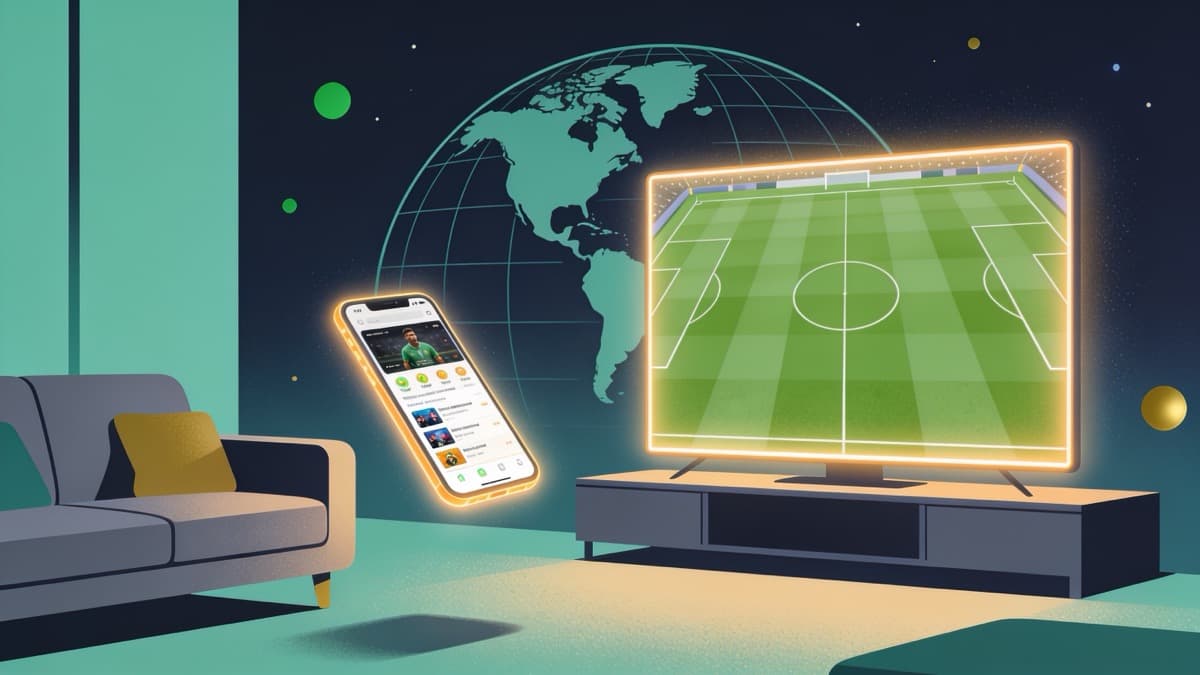
It is tempting to assume a YouTube channel means small-screen viewing, but the opposite has proven true in Brazil. The overwhelming majority of CazéTV's World Cup watch time has come through connected televisions rather than phones or laptops, because the YouTube app ships pre-installed on essentially every smart TV and streaming stick sold today. In practice, opening CazéTV on a living-room TV is no harder than opening any other channel.
- Cost: free, no subscription.
- Coverage: all 104 matches, group stage to final.
- How to watch: the CazéTV channel on YouTube, plus connected-TV apps where available.
- Best for: neutrals, second-screen viewing, and any game the open channels chose not to air.
Pay TV and premium streaming: SporTV, N Sports and Globoplay
Not every fan is content with whatever the free channels choose to broadcast. If you want the full Globo-group treatment — extra simultaneous matches, multi-angle replays and the polished studio wrap-around — the paid tier is where it lives. Two pay-TV channels and one streaming service form the premium layer of Brazil's 2026 coverage.
- 1SporTV — the Globo group's pay-TV sports channel, carrying the group's wider allocation in 4K for subscribers who want more than the open signal offers.
- 2N Sports — the pay-TV partner in the SBT deal, running a simulcast of SBT's 32-match package for cable and satellite subscribers.
- 3Globoplay (with ge.globo) — the group's streaming service, which mirrors the TV Globo and SporTV feeds online with mobile access, multi-camera angles and replays.
For most people, the sweet spot is simple: use free TV Globo and free CazéTV for the vast majority of matches, and only reach for a SporTV or N Sports subscription if you specifically want to watch two overlapping fixtures at once or prefer their studio coverage. There is very little in Brazil's 2026 rights map that forces a fan behind a paywall to see the games that matter. If you are weighing streaming options more broadly, our best VPNs for streaming guide covers how these services behave across devices and regions.
Kick-off times: reading the schedule in Brasília time
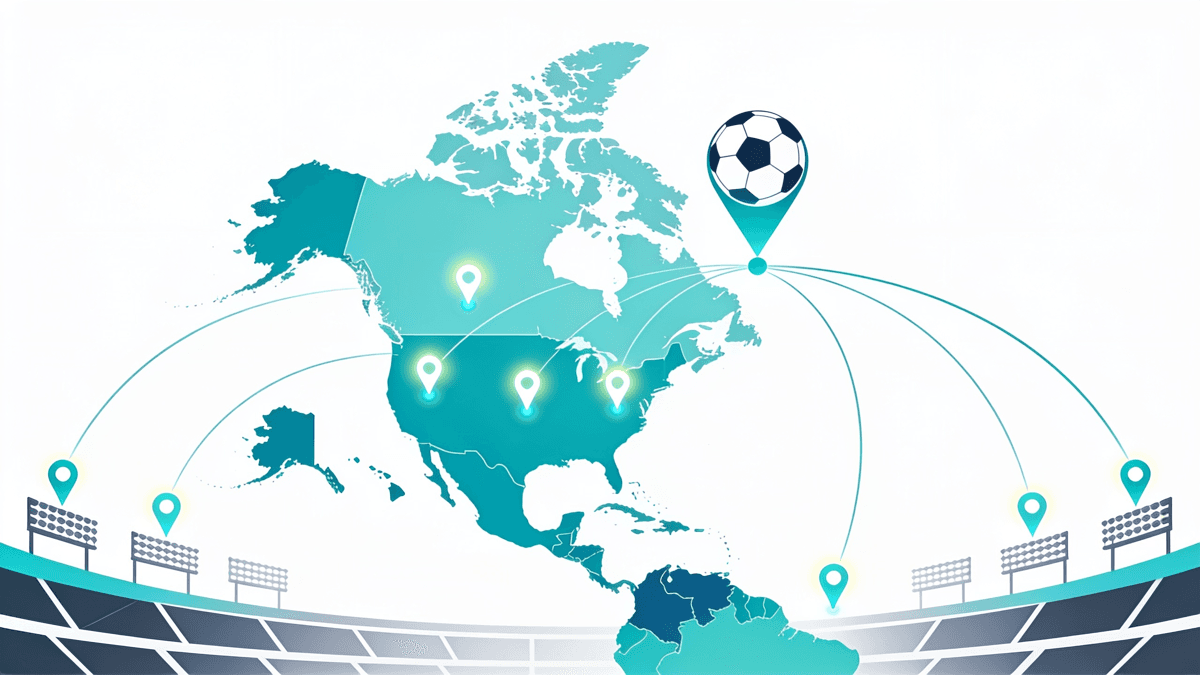
The 2026 World Cup runs from 11 June to 19 July, with the final at MetLife Stadium in New Jersey. Because the tournament is hosted across the United States, Canada and Mexico, kick-offs are set in North American time zones — which means Brazilian viewers need to translate every listing into Brasília time (BRT) before planning their day.
The key thing to know is that the offset is not fixed: it depends entirely on which host city the match is in. Brasília (BRT, UTC-3) sits just one hour ahead of the US East Coast in June and July, but as much as four hours ahead of the Pacific coast. So an evening kick-off in New York is only an hour later in Brazil, while a late night game in Los Angeles or Vancouver can spill past midnight for Brazilian viewers. Always convert from the specific venue rather than assuming a single country-wide offset.
- Check the host city, not just the country — a match in Los Angeles and a match in New York can be three hours apart.
- Expect a spread of BRT slots — roughly from mid-afternoon through to the small hours in Brazil, depending on the fixture's venue.
- Use a live schedule for exact times; our World Cup 2026 viewing guide tracks fixtures and broadcasters as the calendar firms up.
Travelling during the World Cup? How to keep your Brazilian free feed
Here is the scenario that trips up a lot of Brazilian fans: you are used to opening CazéTV on YouTube or firing up Globoplay for free, then you travel — to the host cities in the US, or anywhere else — and suddenly the stream you rely on behaves differently or is geo-restricted to Brazil. Broadcast rights are sold country by country, so your home feed can be blocked the moment your connection appears to be somewhere else.
This is precisely the problem a VPN solves. A VPN routes your connection through a server back in Brazil, so a streaming service sees a Brazilian IP address and serves you the same feed you would get at home. It is a single section of the wider picture — you still need a legitimate account or a free service that you are entitled to use — but for a fan abroad who simply wants their normal Brazilian broadcast, it is the difference between watching and staring at an error screen. If you want to see which services this works with, our can-I-watch checker is a quick way to sanity-check access before kick-off.
The same logic applies in reverse for fans of any nation who want to reach their home coverage while on the road — the principle is identical whether you are chasing a Brazilian, British or American broadcast.
Travelling for the tournament and want to keep your home broadcast? A fast, reliable VPN with Brazilian servers keeps your free feed with you wherever you go.
See our top-ranked VPNs →A few practical notes before you rely on this. Speed matters for live football, so it is worth checking performance in advance — our VPN speed test data compares providers on exactly the throughput a live HD stream needs. And if a stream still stumbles even on a Brazilian server, the culprit is often a DNS leak or a WebRTC leak quietly revealing your real location; both are easy to test for and fix.
Putting it all together: a fan's game-day plan
Strip away the corporate rights language and Brazil's 2026 setup is refreshingly simple to use. The overwhelming majority of fans will never need to pay a cent, because between free TV Globo, free SBT and free CazéTV, almost every meaningful match is covered. Paid tiers exist for enthusiasts who want overlap coverage or premium studio production, not as a gate on the big games.
- Watching in Brazil, casually: TV Globo for the Seleção and the final, SBT for the daily open game, CazéTV for anything they skip.
- Watching in Brazil, comprehensively: add SporTV, N Sports or Globoplay for simultaneous matches and deeper coverage.
- Watching from abroad: a VPN set to a Brazilian server to keep your home feed, plus a quick leak check so the stream holds up.
For the commercial side of the decision — which VPN is genuinely fastest and best value for football, with current pricing — see our dedicated best VPN for the World Cup 2026 guide and the broader best VPNs for sports streaming roundup. If price is your main lever, the live VPN price index tracks what each provider actually charges this month. This article is the editorial map; those pages are where you pick your tool.
Frequently asked questions
Is the 2026 World Cup free to watch in Brazil?
Yes, to a large extent. TV Globo shows every Brazil national-team match and the final free-to-air, SBT airs at least one open match a day early on, and CazéTV streams all 104 matches free on YouTube. Between these three, almost every fixture — and certainly every important one — is available without paying for a subscription.
Which channel shows every single World Cup 2026 match in Brazil?
CazéTV is the only broadcaster in Brazil with rights to all 104 matches, and it streams them free on YouTube, funded by advertising rather than a paywall. If a game is not picked up by TV Globo or SBT for open television, CazéTV is almost always the place to find it live, group stage to final.
Do I need SporTV or Globoplay to watch the World Cup?
No, they are optional. SporTV (pay TV) and Globoplay (streaming) carry the Globo group's wider allocation with extra simultaneous matches, multi-angle replays and studio coverage. But because the Seleção games and the final are on free TV Globo, and CazéTV covers everything free, you only need a paid tier if you want premium extras or overlapping fixtures.
What time do World Cup 2026 matches start in Brasília time?
It varies by host city. The tournament spans the US, Canada and Mexico, so kick-offs use North American time zones. Brasília (BRT) is about one hour ahead of US East Coast venues and up to four hours ahead of Pacific ones, so a match can land anywhere from mid-afternoon to the small hours in Brazil. Always convert from the specific venue.
Can I watch my Brazilian free feed while travelling abroad?
Often only with a VPN. Services like CazéTV and Globoplay are licensed for Brazil, so travelling abroad can geo-block or alter your normal feed. A VPN set to a Brazilian server presents a Brazilian IP address, letting the service serve you the same coverage you get at home, provided you use an account or free service you are entitled to.
When and where is the 2026 World Cup final?
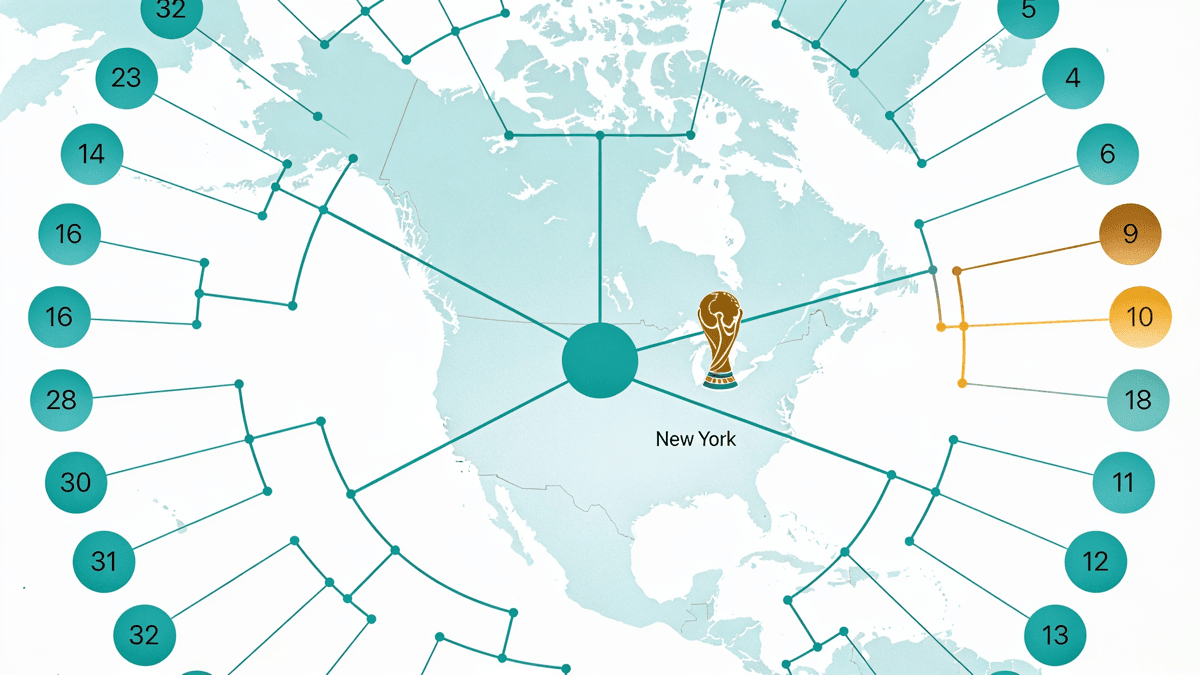
The final is scheduled for 19 July 2026 at MetLife Stadium in East Rutherford, New Jersey, in the United States. The tournament as a whole runs from 11 June to 19 July 2026 across sixteen host cities in the United States, Canada and Mexico, with all matches from the quarter-finals onward played in the US.
Why do some World Cup matches disappear from open TV in Brazil?
Because Globo and SBT each choose which games to air from their allocations, and they naturally prioritise Brazil, marquee ties and knockouts. Lower-profile group matches without a Brazilian angle can be left off the free schedule. When that happens, CazéTV's full 104-match coverage on YouTube is the free fallback.
The best VPNs of 2026, ranked
Now you know how — here are the VPNs we recommend, independently tested and ranked for speed, streaming, privacy and value. Any of them works for everything in this guide.

ExpressVPN Ultra fast & secure. Great for privacy, downloads, and everyday browsing on all your devices. 24/7 live chat support.
ExpressVPN Ultra fast & secure. Great for privacy, downloads, and everyday browsing on all your devices. 24/7 live chat support.

IPVanish Fast speeds with unlimited device connections. Strong no-logs privacy and 24/7 live chat support. Great for families.

IPVanish Fast speeds with unlimited device connections. Strong no-logs privacy and 24/7 live chat support. Great for families.
NordVPN Excellent speeds with one of the largest server networks. Strong security features and easy-to-use apps. 24/7 live chat support.
NordVPN Excellent speeds with one of the largest server networks. Strong security features and easy-to-use apps. 24/7 live chat support.
Proton VPN Swiss-based VPN with strong privacy focus. Audited no-logs policy and open-source apps. Great for privacy-conscious users.
Proton VPN Swiss-based VPN with strong privacy focus. Audited no-logs policy and open-source apps. Great for privacy-conscious users.

CyberGhost Fast speeds and strong privacy tools. Simple apps, automatic WiFi protection, and 24/7 live chat support.
CyberGhost Fast speeds and strong privacy tools. Simple apps, automatic WiFi protection, and 24/7 live chat support.

TotalVPN Affordable VPN with strong privacy and reliable speeds. Easy-to-use apps for all major devices. No-logs policy.
TotalVPN Affordable VPN with strong privacy and reliable speeds. Easy-to-use apps for all major devices. No-logs policy.
Private Internet Access High-speed VPN with a large server network and advanced security settings. Ad blocker included and 24/7 live chat support.
Private Internet Access High-speed VPN with a large server network and advanced security settings. Ad blocker included and 24/7 live chat support.
Surfshark Unlimited device connections at a budget-friendly price. Includes ad blocker and strong privacy tools. Great value for money.
Surfshark Unlimited device connections at a budget-friendly price. Includes ad blocker and strong privacy tools. Great value for money.
Rankings are based on our independent testing methodology. Each guide applies the criteria described on that page, including relevant performance, privacy, product features, and value data. We may earn affiliate commissions from links on this page, which helps fund our testing — this does not influence our rankings.