World Cup 2026 Groups, Fixtures and How to Follow Your Team Across Every Time Zone
A plain-English guide to the new 12-group format, the matchday rhythm from June 11 to July 19, and how to catch every kick-off wherever you are.

vpnrank.io is reader-supported: we may earn a commission if you buy through links in this article. This never affects our rankings.
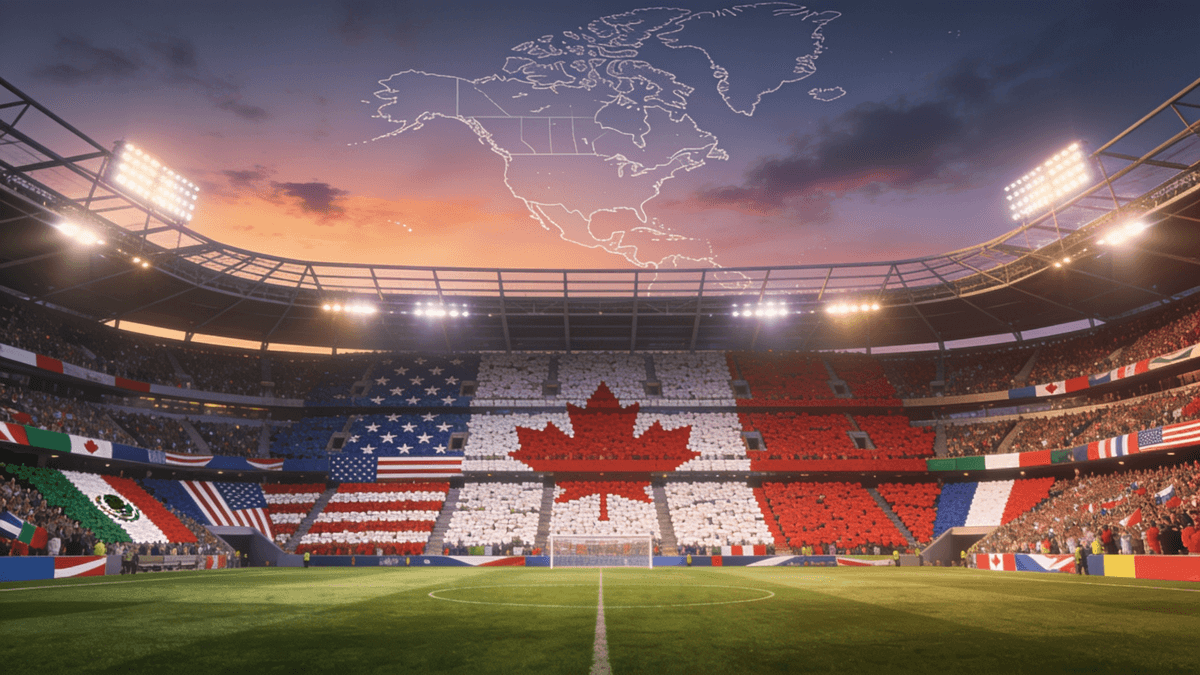
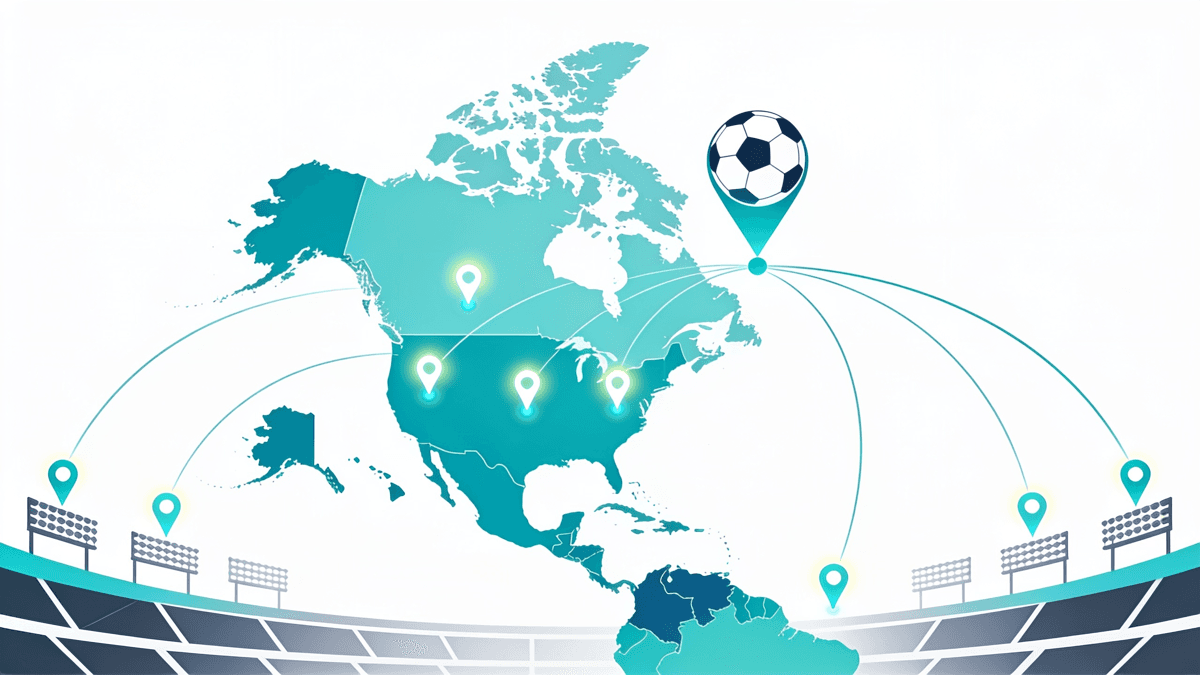
The 2026 World Cup runs from Thursday, June 11 to Sunday, July 19 across the United States, Canada and Mexico — the first tournament co-hosted by three nations and the first with 48 teams. That means 12 groups, 104 matches and 39 days of football spread over four time zones. Here is how it all fits together.
Why 2026 is unlike any World Cup before it
This edition breaks records before a ball is kicked. FIFA expanded the field from 32 teams to 48, stretched the tournament to 39 days, and split hosting duties across three countries and 16 cities for the first time. The result is more nations, more matches and a calendar that behaves differently from every previous World Cup.
- 48 teams instead of 32 — 16 more nations reach the finals.
- 104 matches in total, up from 64 in Qatar 2022 — 72 in the group stage and the rest in the knockouts.
- 16 host cities: 11 in the United States, 3 in Mexico and 2 in Canada.
- 39 days of football, the longest men's World Cup on record.
- The opening match is Mexico against South Africa at Estadio Azteca in Mexico City, which becomes the first stadium to stage three World Cup openers, after 1970 and 1986.
Because the hosts span the continent, kick-off times are scattered across Pacific, Mountain, Central and Eastern zones — plus Mexico's own schedule. For fans watching from Europe, Asia or Oceania, that spread is the single biggest thing to plan around, and it is where a little preparation pays off. The sheer volume matters too: with 40 more matches than in Qatar, there are far more days when something worth watching is on.
The 12-group format explained
The old model had eight groups of four. The new one has 12 groups of four, labelled A through L. Every team still plays three group games, one against each rival, with three points for a win and one for a draw. What changes is how teams advance — and that twist is worth understanding before your team's first whistle.
How teams reach the knockouts
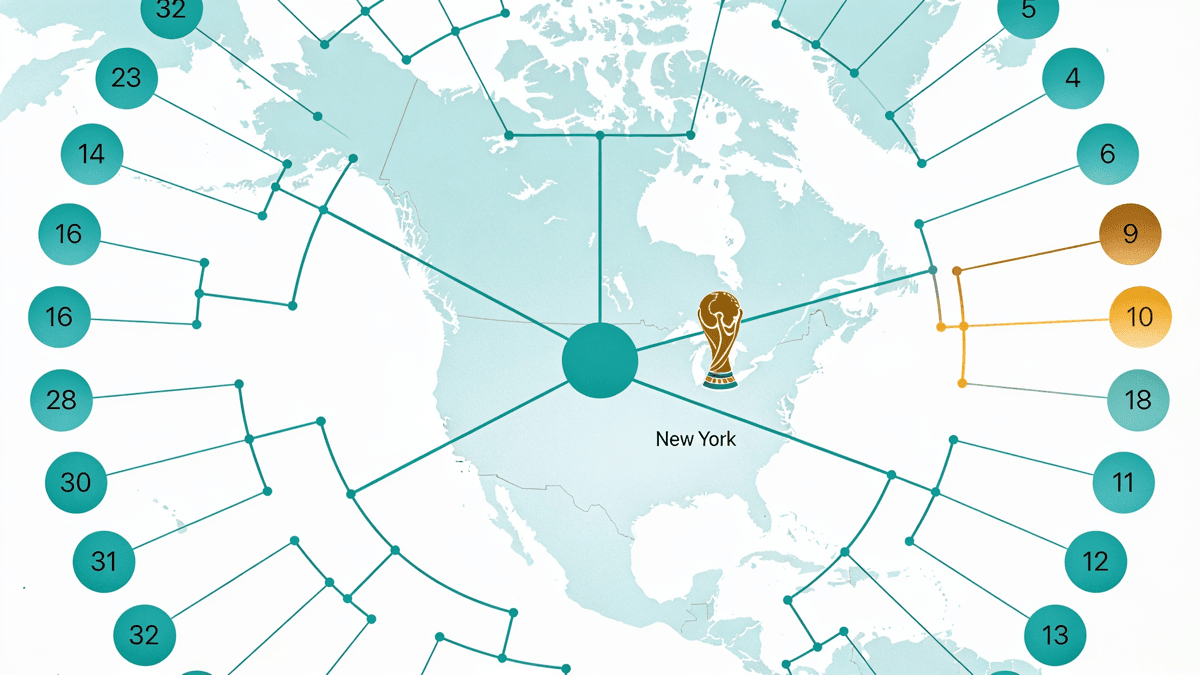
From each of the 12 groups, the top two teams go through automatically. That accounts for 24 places. The remaining eight spots go to the best eight third-placed teams across all groups, creating a 32-team knockout bracket — the new Round of 32.
- 1Finish first or second in your group and you are through, no maths required.
- 2Finish third and you enter a mini-league of the 12 third-placed sides.
- 3The eight best of those third-placed teams are ranked by points, then goal difference, then goals scored, then disciplinary record.
- 4Only if teams are still level after all of that is a drawing of lots used.
The practical takeaway: in 2026, a third-place finish is no longer automatic elimination. Goal difference and even goals scored in a game your team is losing can decide whether they sneak into the bracket, so the final round of group games matters more than ever. It also means a single group's outcome can hinge on results in a completely different group played hundreds of miles away, which is part of why the closing matchdays are so tense.
The knockout bracket, round by round
Once the groups finish on June 27, the tournament becomes straight single elimination. There are no second chances: win or go home. The rounds run in a tight, escalating sequence over roughly three weeks, ending at MetLife Stadium in East Rutherford, New Jersey, on July 19.
- Round of 32 — begins June 28. The new extra round created by the 48-team field.
- Round of 16 — July 4 to 7.
- Quarter-finals — July 9 to 11.
- Semi-finals — July 14 and 15.
- Third-place play-off — July 18.
- Final — Sunday, July 19.
Knockout ties that are level after 90 minutes go to 30 minutes of extra time, and then a penalty shootout if still tied. Because there is an extra round, the eventual winners will play up to eight matches — one more than in previous formats — which puts a premium on squad depth and recovery time between games. If you want the full match-by-match picture, our World Cup 2026 hub keeps fixtures and viewing details in one place.
The matchday rhythm: what a typical day looks like
The group stage, from June 11 to June 27, is the densest part of the calendar. With 48 teams and 72 group matches to fit in, the busiest days feature multiple games stacked back to back, kicking off through the afternoon and evening across North American time zones. Learning the daily rhythm early makes the whole month easier to follow.
Group stage: the busy weeks
Early in the group stage, several matches share a single day, rolling from early-afternoon Eastern kick-offs into the evening. On the heaviest days that can mean four or more games in a row, so it pays to know which ones involve your team. As the group phase closes, the final two matches in each group kick off simultaneously — a long-standing rule that stops teams from knowing exactly what result they need while others are still playing.
Knockout stage: fewer games, higher stakes
Once the bracket starts, the volume drops sharply. Knockout days typically feature one or two marquee fixtures rather than a crowded slate, which makes them easier to plan around — but every one is do-or-die, so missing a kick-off hurts more. Extra time and shootouts also mean a game you tuned into for 90 minutes can run well past two hours. For deep dives on individual ties and streaming, keep an eye on our sports streaming section.
Following your team across four time zones
The hosts stretch from the Pacific coast to the Atlantic, so a single day can include a lunchtime kick-off in the west and a prime-time match in the east. FIFA grouped host cities into three regions — Western, Central and Eastern — partly to cut team travel, and that geography shapes when games land on your screen.
- Western Region — Vancouver, Seattle, San Francisco Bay Area and Los Angeles (Pacific time).
- Central Region — Guadalajara, Mexico City, Monterrey, Houston, Dallas and Kansas City.
- Eastern Region — Atlanta, Miami, Toronto, Boston, Philadelphia and New York/New Jersey (Eastern time).
For viewers in the UK and Europe, the maths is unforgiving: North American afternoon and evening kick-offs land late at night or into the early hours locally. A match starting at 3:00pm Eastern is 8:00pm in the UK; a west-coast prime-time game can push past midnight in London and into the small hours further east. Fans in Asia and Australia face an even steeper climb, with many games falling in the early morning. Build your schedule around your team's kick-offs rather than the whole slate, and you will keep your sleep and your sanity.
Where to watch: broadcasters by country
Rights are carved up country by country, and each major market has a clear home for the tournament. Knowing your local broadcaster — and its streaming app — is the first step to catching every game, especially the ones that fall outside your prime-time hours.
- United States — FOX and FS1 in English; Telemundo and Universo in Spanish, with matches also on the Fox Sports app and Telemundo's Spanish coverage streaming on Peacock.
- United Kingdom — BBC and ITV share the tournament free-to-air, streaming on BBC iPlayer and ITVX.
- Canada — CTV, TSN and French-language RDS, with select matches free over the air on CTV including the opening game and the final.
If you rely on a national free-to-air service like the BBC or ITV, remember those streams are geo-locked to their home country. That is the one snag travellers hit, and it is worth planning for before you leave home. Our guides to watching BBC iPlayer abroad and streaming services generally cover the details.
Watching from abroad or while travelling
Plenty of fans will be away from home during the tournament — on holiday, working abroad, or simply following a team whose broadcaster sits in another country. Free-to-air and subscription streaming apps generally check your location and block playback when you are outside their home market, which is where a little groundwork helps.
A reputable VPN lets you connect back to a server in your home country so your usual streaming app behaves as it does at home, letting you sign in with your existing account. It is a mainstream tool for travellers, and it pairs naturally with checking whether a given match is even available in your region — our can-I-watch checker and streaming guide are good starting points. Always use your own legitimate subscription and follow each service's terms.
Travelling during the World Cup? A fast, reliable VPN keeps your home broadcaster working wherever you are — see why ExpressVPN is our top pick for streaming sport abroad.
See our top-ranked VPNs →Speed matters for live sport more than almost anything else, because buffering during a goal is the worst possible moment to drop frames. If you go this route, pick a provider with servers in your home country and strong streaming performance; you can compare options in our best VPNs for streaming roundup and sanity-check throughput with our VPN speed test.
Every qualified nation has a page with its fixtures and the broadcaster that showed them at home, including sides with a smaller following abroad such as Croatia, Ecuador, Ghana, Ivory Coast and South Korea. Where the matches were free to air is listed in our country-by-country list of free World Cup broadcasters.
How to prepare before June 11
A little setup before the opening whistle turns a chaotic month into an easy one. Once the group draw is confirmed, you can map your team's three fixtures, convert the kick-offs to your local time, and line up the right streaming app in advance rather than scrambling on matchday.
- 1Note your team's three group fixtures and their dates.
- 2Convert each kick-off to your local time so late nights do not catch you out.
- 3Confirm which broadcaster or app carries your team in your country.
- 4If you will be travelling, test your setup at home first so nothing surprises you abroad.
- 5Bookmark a reliable fixtures page — our World Cup 2026 guide tracks the schedule and viewing options as they firm up.
Do that groundwork and the rest is enjoyment. Whether your team is chasing a top-two finish or sweating on one of the eight third-place spots, understanding the format and the rhythm means you will always know what is at stake — and never miss the moment it happens. With 104 matches to choose from, there is more football to enjoy than in any World Cup before it.
Frequently asked questions
How does the World Cup 2026 group stage work?
The 48 teams are split into 12 groups of four, labelled A to L. Each team plays the other three in its group once, for 72 group matches in all. The top two from every group advance automatically, and the eight best third-placed teams also progress, forming a 32-team knockout bracket.
When does the World Cup 2026 start and finish?
The tournament runs from Thursday, June 11 to Sunday, July 19, 2026 — 39 days in total. The group stage runs June 11 to 27, the knockout Round of 32 begins June 28, and the final is on July 19 at MetLife Stadium in East Rutherford, New Jersey.
Can a third-placed team qualify for the knockouts in 2026?
Yes. Unlike a straight group format, the new 12-group structure sends the eight best third-placed teams into the Round of 32 alongside the 24 group winners and runners-up. Third-place sides are ranked by points, then goal difference, then goals scored, then disciplinary record.
How many matches are there at World Cup 2026?
There are 104 matches in total, up from 64 in 2022 — 72 in the group stage and the rest across the knockouts. The expanded field also adds a Round of 32, meaning the eventual champions will play up to eight games, one more than under the previous 32-team format.
Where can I watch the World Cup 2026?
In the US, FOX and FS1 show matches in English while Telemundo and Universo cover Spanish, with Telemundo's coverage streaming on Peacock. In the UK, the BBC and ITV share the tournament free-to-air via BBC iPlayer and ITVX. In Canada, CTV, TSN and RDS carry coverage, with select games free on CTV.
How do I follow the World Cup across different time zones?
Host cities span Pacific, Central and Eastern zones. Convert each of your team's kick-offs to your local time in advance. In the UK, a 3:00pm Eastern kick-off is 8:00pm, while west-coast prime-time games can run past midnight. Plan around your team rather than the whole slate.
Can I watch my home broadcaster while travelling abroad?
Services like BBC iPlayer and ITVX are geo-locked to their home country, so playback is blocked when you travel. A reputable VPN connects you back to a home-country server so your usual app works as normal. Always use your own legitimate subscription and follow each service's terms.
The best VPNs of 2026, ranked
Now you know how — here are the VPNs we recommend, independently tested and ranked for speed, streaming, privacy and value. Any of them works for everything in this guide.

ExpressVPN Ultra fast & secure. Great for privacy, downloads, and everyday browsing on all your devices. 24/7 live chat support.
ExpressVPN Ultra fast & secure. Great for privacy, downloads, and everyday browsing on all your devices. 24/7 live chat support.

IPVanish Fast speeds with unlimited device connections. Strong no-logs privacy and 24/7 live chat support. Great for families.
IPVanish Fast speeds with unlimited device connections. Strong no-logs privacy and 24/7 live chat support. Great for families.

NordVPN Excellent speeds with one of the largest server networks. Strong security features and easy-to-use apps. 24/7 live chat support.
NordVPN Excellent speeds with one of the largest server networks. Strong security features and easy-to-use apps. 24/7 live chat support.
Proton VPN Swiss-based VPN with strong privacy focus. Audited no-logs policy and open-source apps. Great for privacy-conscious users.
Proton VPN Swiss-based VPN with strong privacy focus. Audited no-logs policy and open-source apps. Great for privacy-conscious users.

CyberGhost Fast speeds and strong privacy tools. Simple apps, automatic WiFi protection, and 24/7 live chat support.
CyberGhost Fast speeds and strong privacy tools. Simple apps, automatic WiFi protection, and 24/7 live chat support.

TotalVPN Affordable VPN with strong privacy and reliable speeds. Easy-to-use apps for all major devices. No-logs policy.
TotalVPN Affordable VPN with strong privacy and reliable speeds. Easy-to-use apps for all major devices. No-logs policy.

Private Internet Access High-speed VPN with a large server network and advanced security settings. Ad blocker included and 24/7 live chat support.
Private Internet Access High-speed VPN with a large server network and advanced security settings. Ad blocker included and 24/7 live chat support.

Surfshark Unlimited device connections at a budget-friendly price. Includes ad blocker and strong privacy tools. Great value for money.
Surfshark Unlimited device connections at a budget-friendly price. Includes ad blocker and strong privacy tools. Great value for money.
Rankings are based on our independent testing methodology. Each guide applies the criteria described on that page, including relevant performance, privacy, product features, and value data. We may earn affiliate commissions from links on this page, which helps fund our testing — this does not influence our rankings.